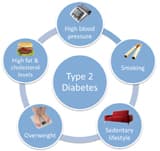
Diabetes is a global problem. WHO has projected that 346 million people worldwide have diabetes. In 2004, an estimated 3.4 million people died from consequences of high blood sugar. Deaths due to diabetes will double between 2005 and 2030. A healthy diet, regular physical activity, maintaining normal body weight and avoiding tobacco use can prevent or delay the onset of type II diabetes (1).The first line of therapy for a patient with suspected type-II diabetes involves advice about lifestyle modification, which includes āhāra (diet) and vihāra (routine activities and exercises). This can help to achieve adequate glycemic control in approximately 50% of patients; while anti-diabetic drugs will be required for 20-30% and insulin of the remainder (2).
Āyurveda is believed to be the first medical system in the world, which diagnosed and managed diabetes mellitus under the name, madhumeha. It is mainly caused due to apathya āhāra vihāra sevana (consuming of unwholesome food and lifestyle) (3). However if a person follows certain dietary rules, there is very little need for drug treatment. When a person is on an irregular diet, the drug treatment alone cannot control the disease (4).
Objectives of the study
1. Compiling the available literature on āhāra and vihāra
2. Developing āhāra-vihāra modules for diabetes mellitus type II
3. To evaluate the efficacy of the developed module.

Management of diabetes through āhāra and vihāra
For a diabetic patient, a balanced diet which is low in fat, carbohydrates and cholesterol should be given always. The intake of food products which have kaṭu, tikta and kaṣāya tastes should be increased. In Āyurveda, bitter leaves and vegetables are recommended which are known for delayed absorption, thus causing a smaller increase of blood glucose after the meal. In Āyurveda, fibre-rich food like green vegetables and yava (barley) are highly recommended for a diabetic diet in different forms. The fibres get neither absorbed nor metabolised in the small intestine and so slow the movement of food and decrease blood glucose levels. The fibre content also supports the digestive system. Recent studies also suggest that the fibre content improves the ability of cells to receive and utilise insulin (5). Some examples of fibre-rich food are whole grams, the majority of fresh fruits, fresh vegetables, leafy vegetables, legumes, etc. In all the Āyurvedic classics, the groups of pathya āhāra dravyas (wholesome food) are described in detail and they comprise the entire food group noted in the following table:
Table 1: Pathya āhāra dravyas (6, 7, 8)
Vihāra includes a daily regime of activities and exercises. Physical exercises increase the proportion of insulin-sensitive fibres in the muscles. They also increase oxidative enzyme activity, and both these changes favour the utilisation of fat as the fuel, thus controlling blood sugar elevations. Studies have shown that yoga produces significant results in the management of diabetes (9). A type-II diabetes mellitus patient should walk barefoot for 800 miles in a year (an average of 3.5 km/day) or do heavy work like digging a well or do exercises like wrestling, horse riding, vigorous walking, etc. However, thin people are advised to protect their strength and not to do vigorous exercises (10).

Materials and methods
This attempt was an observational study. No medicines were administered in this study. The prepared āhāra chart, vihāra A (Daily regimen — dinacaryā chart) and vihāra chart B (yoga) modules were given to the newly detected patients with diabetes mellitus type-II. Information on specific āhāra and vihāra practices were collected from Caraka Saṁhitā, Suśruta Saṁhitā, Aṣṭānga Hṛdaya and Sangraha, etc. classical textbooks and, based on that, the āhāra and vihāra modules were prepared for the convenience and need of present-day society. The choice of food items were based on local availability and the dietary pattern of the study population. In this study, samples of 30 patients were selected for the study.
Inclusion criteria
1. Patients of either sex, between the age group of 35-75 years
2. Patients with type–II diabetes mellitus
3. Patients with FBS >130 mg/dl & <180 mg/dl and PPBS >160mg/dl & <200 mg/dl
4. Newly detected type-II diabetes mellitus patients
5. Agreement to follow the prescribed āhāra and vihāra modules continuously for a period of 60 days.

Exclusion criteria
1. Patients with insulin-dependent diabetes mellitus type-I
2. Patients with fasting blood-sugar (FBC) >180 mg/dl and postprandial blood-sugar (PPBS) >200 mg/dl
3. Diabetic patients with any other complications
Diagnostic and assessment criteria
Diagnosis was based on the signs and symptoms of diabetes mellitus (polyphagia, polyuria, polydipsia) and where laboratory findings showed FBS >130 mg/dl and PPBS >160mg/dl. An assessment was done at the beginning, the 30th day, followed by a one month follow-up at the 60th day. Samples of urine, blood were collected three times from each patient for laboratory investigations of FBS, PPBS, and urine sugar at the beginning, on the 30th day and on the 60th day. All participants were given instruction sheets consisting of an āhāra chart, vihāra A (daily regimen – dinacaryā) chart and vihāra B Chart (yoga) for seven days. The patients were advised to repeat the modules for two months after the completion of each cycle. Patients were told to continue these with their regular medications, if any, for conditions such as hypertension, etc.

Table 2: Āhāra (diet) Chart (11, 12, 13)
Table 3: Vihāra chart A (daily regimen — dinacaryā) (14, 15)
Table 4: Vihāra chart B (yoga) (16, 17)
In these studies, 30 patients were tested for urine sugar, FBS and PPBS. Out of the 30 samples, 23 results came down to normal levels. In the other seven samples, urine sugar came to nil and their FBS and PPBS levels decreased from before.
Discussion and conclusion
These patients were not given any medicines related to diabetes mellitus. Approximately 73% patients achieved FBS of < 130 mg/dL or PPBS < 160 mg/dL at the end of the study, the remaining 27% of patients showed decreased levels of FBS, PPBS. Reasons for that might be an inability to follow prescribed āhāra and vihāra, apathya-āhāra-vihāra sevana. A larger group is required to prove results conclusively. Thus the pilot study is an attempt to take in all the traditional wisdom prescribed in our ancient texts for the management of DM type-II. As per the principle indicated by the bṛhatrayis and laghutrayis of Āyurveda, these developed modules are well suited for controlling the urine and blood-sugar levels in diabetes mellitus type-II.