The objective of this article is to create awareness among people about alternative and complimentary methods to control respiratory diseases and to lead a healthy life. According to a WHO estimate (2007), 235 million people have asthma worldwide (1) and 210 million people have chronic obstructive pulmonary disease (COPD), while millions have allergic rhinitis and others often-under-diagnosed chronic respiratory diseases. These diseases cause structural and functional changes in the remodelled airways. The mechanics of respiration get affected, leading to mismatches between ventilation and perfusion and which may also increase alveolar dead space resulting in hypercapnia, hypoxia and hypoxemia. They may become a lifelong challenge for some. The severity of the problems increases with environmental fluctuations (ozone, a colourless gas-level increase in the atmosphere).
Being now 76 years of age and as a patient of asthma, I have devised exercises by which the problems can be brought under control within minutes. The exercises pertain to the cleaning of upper airway passages which are primary sites of colonisation of pathogens especially the mouth, nose, pharynx from excess mucus These diseases cause the following changes in the airways:
Inflammation
This is a physiological process that plays the role of immunological defence against infection, injury or allergy. It is one mechanism the body uses to protect itself from invasion by foreign organisms and to repair tissue trauma.

Hyper-secretion of mucus
This is one of the major pathological features of upper airway disease. It is the result of goblet cell hyperplasia in respiratory mucosa and is a prominent feature of inflammation. Chronic mucus hyper-secretion is a potential risk factor for accelerated loss of lung function. It increases risk of hospital admission as a result of lower respiratory tract infections. Its viscosity causes extensive ciliary damage and impairs mucus clearance.
Chronic mucus hyper-secretion is a common feature in the elderly. The thick viscous mucus in the lungs is conducive to pathogens.
Bronchospasm
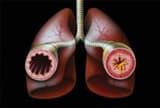
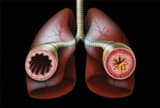
This is an additional factor, particularly in asthma patients in whom the airways are hyper-reactive. It is caused as a result of irritation or trauma of smooth muscles around them. With inflammation, bronchospasm and the excess mucus secretions retained in the airways, the patency of the airways gets reduced. The airflow slows down towards the periphery of the bronchial tree to end as diffusion. As a result of these changes, asthma patients suffer from breathlessness.

These exercises are therapeutic tools and are a potent medication in history. These are muco-kineses and a recipe for healthy ageing. They reduce C-reactive protein resulting in reduced inflammation. Exercises strengthen the remodelled airways and reset the biological ageing process. There is no substitute for exercise.
Dr William Joel Meges, Professor and Chief of the Division of Toxicology Brody School of Medicine at East Carolina University and Ms. Carol Svec, a fellow researcher, stated in their book, The Inflammation Cure, “If we could bottle the benefit of exercise, it would be the most potent medication in history. People who exercise have fewer physical disabilities and they seem to delay ageing disability by about 15 years.” A host of studies proved that exercise protects against chronic disease, extends life, and leads to a better quality of life as we age. According to them, the latest discovery is that exercise lowers levels of the inflammation marker (CRP), C Reactive Protein in the blood (2). Thus exercise reduces inflammation in the body. There is no age-limit to the benefits of exercise. People can start exercising at any age and can continue exercising throughout life. The earlier one starts, the better-off one will be, but people who do not begin exercising until age 75 can still expect to see some increases in life-expectancy. Strenuous exercises on the other hand, can be harmful and suppress immune functions. Both aerobic and strengthening exercises have been shown to decrease levels of inflammation. Ideally both should be part of one’s weekly routine. One should obtain a doctor’s approval before starting any intense regimen.
The following are the exercises I have devised, which have helped me remove excess mucus from the respiratory passages:

1. Upper airway passages – mouth, nose, pharynx and the sinuses cleaning exercises;
2. Bronchial airways cleaning exercises; and
3. Physical, aerobic and yogic exercises.

Upper-airway passages cleaning exercises
These exercises should be practised with a hyper-tonic solution, i.e., a solution having greater osmotic pressure than that of cells or body fluids which draws water out of the cells, thus inducing plasmolysis. A glass of warm water mixed with a little sodium chloride (common salt crystals) will meet the purpose. The solution should be warmer than that of body temperature, i.e., 37.00 degrees Celsius. Better results can be achieved if patients use the solution at a temperature of 40-41 degrees Celsius.
The concept is based on ‘Living cells are osmotic systems and will shrink in hyper-tonic solutions (higher salt concentration than in cell organelles) and swell and can burst in hypo-tonic solutions (pure water or low salt concentration).’

This concept is useful, because the nasal mucosa is lined with permeable membrane bound in it by the cell organelles. During the inflammatory process, the cells get filled with water, secretions, enzymes, etc. Osmotic pressure varies with the concentration of the solution and with temperature increase.
1. Take a glass of hyper-tonic solution, keep it at the entrance of the nasal passages, bend the body forward to about 70 to 80 degrees, slowly snort in the solvent until it goes in through the nostrils, up through the nasal passages, down into the throat (pharynx) from where it takes a ‘U’ turn, enters the oral cavity and when it collects in the mouth, spit it out. Blow your nose forcefully until the excess mucus collected in the nasal lining gets drained out.
2. Take the solvent, bend the body forward as stated and keep it at the entrance of the nasal passages (ala nasi), breathe out forcefully through the mouth till the lungs become empty from maximum air, then slowly snort in the solvent. It will go in through the nostrils, up through the deep cone-shaped tortuous nasal passages affecting all the turbinates (inferior, middle and superior) on the lateral sides of the nose, down into the throat (pharynx) from where it takes a ‘U’ turn, enters the oral cavity and collects in the mouth. Then spit it out. Blow out forcefully and the excess mucus collected in the nasal lining gets drained out.

3. Take sufficient hyper-tonic solution into the mouth, keep it wide open, bend the head backward till the trachea gets stretched and the solvent touches the oro/naso pharynx, gargle for a few seconds and try to push out the solvent through the nasal passages. During this process, the whole of the nasal lining, particularly the sinuses, the lachrymal and ear (Eustachian tube) duct openings into the turbinate get cleaned. During inflammatory conditions, the tortuous turbinate gets hyper-trophied and may result in nasal blocks. In such circumstances, the exercises should be practised slowly.
While doing the first two exercises, there is no possibility for the solvent to reach the glottis as the body is in a forward — bending position and while practising the third exercise also there is no scope for the solvent to enter the lungs as the patient will be trying to gargle (expel the air from lungs) at the oro/nasal pharynx level.