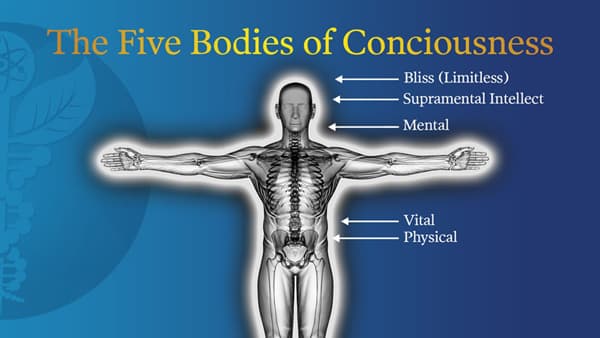

Evolution is the journey of transformation. It deals with the concepts around change, development, growth, progress. Every object, context and being are in a constant state of change in the world, bound by time and space. This article attempts to describe evolution as it occurs in the world of matter and mind, the macro and the micro. The source of the framework used in this article has been adapted from Sri Aurobindo’s theory and philosophy on evolution. This story of evolution explains the three Realms of Inconscient Inactivity and Stillness, Conscient Activity and Movement and Super-Conscient Activity and Stillness. The three realms, while distinct, are also fluid and move back and forth. The framework describes the fields of operations, the transition dimensions, the movements and the realisation of potentialities through which all matter and beings operate and evolve. This article asserts that evolution is a conscious, continuous, inevitable process of transformation of the consciousness, moving from Inconscience to Conscience and to Super-Conscience. It also highlights the necessity for alignment in the physical, vital, mental and intellectual dimensions for experiencing oneness within and outside. This is what we mean by being in a state of whole, integral, complete fulfilment and well-being.
Evolution is the journey of transition and transformation. It deals with concepts around change, development, growth, progress. Every object, context and being in the world is in a constant state of change bound by time and space.
At its core, evolution is a conscious, continuous, inevitable process of transformation of the consciousness, characterised by widening, heightening, deepening and finally, integration.
This article attempts to outline the evolution of the consciousness as it occurs in the world of matter, vital, mind and spirit. The source of the framework used in this article has been adapted from Sri Aurobindo’s theory and philosophy on evolution, the Mother’s writings and also derived from the Vedantic body of scriptures.

The following section explains the framework in detail, followed by the conclusions on the relevance and usefulness, both for individuals at a personal growth level and to get an understanding on the workings of objects and beings in the world.
Amongst all existing beings, humans are currently in the highest state of evolution. This is attributed to the presence of a rational intellect that can discriminate (Vivekabuddhi).This Viveka renders humans capable of persistent thought in their search for answers to the existential questions, ‘Who am I; why am I the way I am; why is the world the way it is ?’. It is also this intellect that allows humans to undertake this exploration into the evolution of consciousness.
Evolution deals with the unfolding of the consciousness, the underlying principle, the substratum, the cause and the effect of evolution. Consciousness is that energy within all objects and beings, the vitality behind the sense organs, the feeler potential in the mind, the light that illumines the intellect. Consciousness exists at all times, everywhere, in everything even when it may appear to be dormant, inert. For its awakening, it awaits for the right aspiration, preparation, readiness and nurturance to convert from inactive to active.

Sri Aurobindo explains evolution with another premise called involution which precedes evolution. This premise considers that it all began from nothingness, where there was no cosmos, matter, life, or spirit, only a consciousness. This consciousness had an aspiration, an urge to manifest and express the possibilities lying latent within.This urge then manifested as the cosmos and matter. Life emerged when the chemicals and gases in the cosmos rearranged themselves into life-supporting states (e.g. water). Progression took place from simple life forms to complex beings with mind, increasing perception and awareness of something larger than what is manifested.This consciousness then, which manifests, obviously must have been involved from the beginning in the whole of matter and in every knot, formation and particle of matter, life, mind and whatever is above mind.
Evolution and involution are processes reverse to each other. If evolution is considered to be a state of ascent, involution is one of descent. Evolution starts from nothingness to inconscient, to subconscient, to the formation of matter. Its goal is to reach the highest state of consciousness. Involution on the other hand is the unmanifested holding of all the inherent potentials and energy within.
A simple example of this is that the future tree is existent in the present seed. The process of the seed turning into a tree is evolution and the presence of the energy-force (consciousness) and the potentials within the seed to enable the transformation, is involution.

The nature of evolution is to transcend, co-holding multiplicity and simultaneity in its process. For the purpose of this article, we will focus the discussions along the realms of evolution, beginning at the stage of matter and its systematic progress thereafter. For a simpler understanding of this process, it is easier to conceive it as moving across three definitive stages of development and progress, referred to here as realms.
The three realms that capture the story of evolution are: The Realm of Inconscient Inactivity and Stillness; The Realm of Conscient Activity and Movement; and finally the Realm of Super-Conscient Activity and Stillness. These three Realms are where the world and all matter, objects and beings operate in.
The Realm of Conscient Activity and Movement lies in the middle. This is the field of activity, where action is inevitable. The human journey primarily takes place within this realm. This realm is the threshold for the growth of the consciousness. The Realm of Inconscient Inactivity and Stillness that occurs prior in forms of the nascent existence of the consciousness.

The Realm of Super-Conscient Activity and Stillness that occurs after, apprises of all the possibilities on alignment of the consciousness to the highest and operates from there. Evolution, moves from Inconscient Stillness and Inactivity to Conscient Activity and Movement to Super-Conscient Activity and Stillness. We can consider it as a movement from apparently inert matter towards life and rudimentary mind, as seen in the vegetable and animal kingdoms. This is followed by the evolution in human beings, who have a developed vital, mind and intellect.
And lastly, it is the movement towards a higher state of existence that transcends the limitations and boundaries of time and space.It is important to note that, while human beings are currently at the highest point in the cycle of evolution, they are not the end-point in evolution, “Man is a transitional being; he is not final; for in him and high beyond him ascend the radiant degrees which climb to a divine supermanhood (1).”
The dimensions and progression have been captured in the Table of page 21.We will now progress to the details across the fields of operations, the transition dimensions, the movements and the realisation of the potentialities through which all matter and beings operate and evolve.These realms are to be considered as distinct, but fluid with possibility of movement towards ascension and or descent, linear and or horizontal.

We will now systematically analyse each variable of study across the three realms.
The field referred to here is the entire field of activity and all its constituents that operate within the field. In the Gītā (verses 13.4 -13.7), this is termed as the Kṣetra (2). It consists of the five great elements, individualised ego, intelligence, the unmanifested, the ten senses, the mind, the five sense objects, and the entire universe of feelings and emotions.
The field in the realm of the Inconscient Inactivity and Stillness constitutes the five great elements (Pañca Mahābhūtas) in their gross form with all the permutations and combinations within. The nature of the field is perceived to be inert, dormant and ignorant of the potentials lying within.

In the realm of Conscient Activity and Movement, there is the full spectrum of the senses, mind, ego, intelligence, sense objects and the interplay of all the thought, feelings and action. This is the world of transactions (the samsara, the world). All the acts of doership, enjoyership, desires, attachments, and dualities existing here are that generated by the mind, strengthened by the mind and acted on by the mind. The individuation by the Mind and Ego (‘I’ness, ‘My’ness) occurs in this realm.
The Realm of Super-conscient Activity and Stillness is the field where effortless action flows, as if in a state of Actionlessness (3). Verse 4.18 mentions this as one who experiences‘action’ in ‘inaction’ and ‘inaction’ in ‘action’.There is no experience of doership, only of enjoyership. Sri Aurobindo mentions such a being as the Divine worker that, “...in the full flood of action the soul is free from its works, is not the doer, not bound by what is done, and he who lives in the freedom of the soul, not in the bondage of the modes of Nature, alone has release from works. This is what the Gita clearly means when it says that he who in action can see inaction and can see action still continuing in cessation from works, is the man of true reason and discernment among men. This saying hinges upon the Sankhya distinction between Purusha and Prakriti, between the free inactive soul, eternally calm, pure and unmoved in the midst of works, and ever active Nature operative as much in inertia and cessation as in the overt turmoil of her visible hurry of labour. This is the knowledge which the highest effort of the discriminating reason, the buddhi, gives to us, and therefore whoever possesses it is the truly rational and discerning man, sa buddhimān manuṣyeṣu, not the perplexed thinker who judges life and works by the external, uncertain and impermanent distinctions of the lower reason. Therefore the liberated man is not afraid of action, he is a large and universal doer of all works, kṛtsna-kṛt; not as others do them in subjection to Nature, but poised in the silent calm of the soul, tranquilly in Yoga with the Divine. The Divine is the lord of his works, he is only their channel through the instrumentality of his nature conscious of and subject to her Lord. By the flaming intensity and purity of this knowledge all his works are burned up as in a fire and his mind remains without any stain or disfiguring mark from them, calm, silent, unperturbed, white and clean and pure. To do all in this liberating knowledge, without the personal egoism of the doer, is the first sign of the divine worker (4).”