Water (H2O, HOH) is the most abundant molecule on earth's surface. It is in dynamic equilibrium between the liquid and vapour states at standard temperature and pressure. At room temperature, it is nearly colourless with a hint of blue, a tasteless and odourless liquid. Many substances dissolve in water and it is commonly referred to as the universal solvent. Because of this, water in nature and in use is rarely pure, and may have some properties different from those in the laboratory. However, there are many compounds that are essentially, if not completely, insoluble in water. Water is the only common substance found naturally in all three common states of matter, i.e. solid, liquid and gas.
About 1,460 teratonnes (Tt) of water cover 71% of the earth's surface, mostly in oceans and other large water bodies, with 1.6% of water below ground in aquifers and 0.001% in the air as vapour, clouds (formed of solid and liquid water particles suspended in air), and precipitation. Saltwater oceans hold 97% of surface water, glaciers and polar ice caps 2.4%, and other land surface water such as rivers and lakes 0.6%. Water moves continually through a cycle of evaporation or transpiration (evapo-transpiration), precipitation, and run-off, usually reaching the oceans. Winds carry water vapour over land at the same rate as run-off into the sea, about 36 Tt per year. Over land, evaporation and transpiration contribute another 71 Tt per year to the precipitation of 107 Tt per year over land.
Water in the universe
Much of the universe's water may be produced as a by-product of star formation. Water has been detected in interstellar clouds within our galaxy, the Milky Way. It is believed that water exists in abundance in other galaxies too, because its components, hydrogen and oxygen, are among the most abundant elements in the universe. Interstellar clouds eventually condense into solar nebulae and solar systems, such as ours.

The human body is anywhere from 55% to 78% water depending on body size. To function properly, the body requires between one and seven litres of water per day to avoid dehydration. The precise amount depends on the level of activity, temperature, humidity and other factors. Most of this is ingested through foods or beverages other than drinking straight water. It is not clear how much water intake is needed by healthy people, though most advocates agree that 8-10 glasses of water (approximately 2 litres) daily is the minimum to maintain proper hydration.
Medical literature favours a lower consumption, typically 1 litre of water for an average male, excluding extra requirements due to fluid loss from exercise or warm weather. For those who have healthy kidneys, it is rather difficult to drink too much water, but (especially in warm humid weather and while exercising) it is dangerous to drink too little. People can drink far more water than necessary while exercising, however, putting them at risk of water intoxication (hyperhydration), which can be fatal. The 'fact' that a person should consume eight glasses of water per day cannot be traced back to a scientific source. There are other myths such as the effect of water on weight loss and constipation that have been dispelled. Original recommendation for water intake in 1945 by the Food and Nutrition Board of the National Research Council read:
"An ordinary standard for diverse persons is 1 milliliter for each calorie of food. Most of this quantity is contained in prepared foods". The latest dietary reference intake report by the United States National Research Council in general recommended (including food sources): 2.7 litres of water total for women and 3.7 litres for men. Specifically, pregnant and breastfeeding women need additional fluids to stay hydrated. According to the Institute of Medicine - who recommend that, on average, women consume 2.2 litres and men 3.0 litres - this is recommended to be 2.4 litres (approx. 9 cups) for pregnant women and 3 litres (approx. 12.5 cups) for breastfeeding women since an especially large amount of fluid is lost during nursing. Also noted is that normally, about 20 percent of water intake comes from food, while the rest comes from drinking water and beverages (caffeinated included). Water is excreted from the body in multiple forms; through urine and faeces, through sweating and by exhalation of water vapour in the breath. With physical exertion and heat exposure, water loss will increase and daily fluid needs may increase as well.

Humans require water that does not contain too many impurities. Common impurities include metal salts and/or harmful bacteria, such as Vibrio. Some solutes are acceptable and even desirable for taste enhancement and to provide needed electrolytes.
The single largest freshwater resource suitable for drinking is Lake Baikal in Siberia, which has a very low salt and calcium content and is very clean.
Water has a very important message for us. Water is telling us to take a much deeper look our
selves. When we do look at our selves through the mirror of water, the message becomes amazingly,
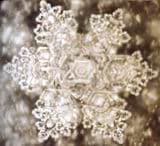
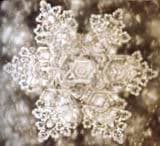
crystal, clear. We know that human life is directly connected to the quality of our water, both within and all around us. Masaru Emoto, a creative and visionary Japanese researcher has published an important book, The Message from Water. This book shows changes in water crystals when exposed to different vibrations. He freezes droplets of water and then examines them under a dark field microscope that has photographic capabilities. From Mr. Emoto's work we are provided with factual evidence, that
human vibrational energy, thoughts, words, ideas and music, affect the molecular structure of water. Water from pristine mountain streams and springs show the beautifully formed geometric designs in their crystalline patterns. Polluted and toxic water from industrial and populated areas and stagnated water from water pipes and storage dams show definitively distorted and randomly formed crystalline structures.
With the recent popularity in music therapy, Emoto decided to see what effects music has on the structuring of water. He placed distilled water between two speakers for several hours and then photographed the crystals that formed after the water was frozen.
After seeing water react to different environmental conditions, pollution and music, Emoto and colleagues decided to see how thoughts and words affected the formation of untreated, distilled, water crystals, using words typed onto paper by a word processor and taped on glass bottles overnight. The same procedure was performed using the names of deceased persons. The waters were then frozen and photographed.

These photographs show the incredible reflections of water, as alive and highly responsive to every one of our thoughts and emotions. It is quite clear that water easily takes on the vibrations and energy of its environment, whether toxic and polluted or naturally pristine, either within ourselves or surrounding us in others and the environment.
Mr. Emoto's extraordinary work is an awesome and powerful tool, which can change our perception of ourselves and the world we live in forever. We now have profound evidence that we can positively heal and transform ourselves and our planet by the thoughts we choose to think and the ways in which we put those thoughts into action.
In the past two decades, scientific research has come up with some startling new information about water. Water is not just some simple liquid that we happen to drink. Scientists such as the French biologist Dr. Jacques Beneviste, a physicist with the Temple University, Philadelphia; Dr. Wolfgang Ludwig, a biologist in Cooperative Nuova, Milan; Dr. Enzo Ciccolo, Director of the Civil Environmental Laboratory, Fieberbrunn, Germany, Dr. Horst Felsch and Drs. Engler and Kokoschinegg have performed experiments with water and have arrived at surprising conclusions.

1. Water is a carrier of information. As a solvent it is the best-known conductor of vibration, with information transfer possible without direct contact (Ciccolo).
2.. Water can transfer such information from vibrational patterns, or 'memory' to other systems, including living organisms (Ludwig) (Felsch).
3. Water possesses the ability to store information that has been impressed upon it from a given vibration for long periods (Engler and Kokoschinegg, 1988), as can be measured by specific electromagnetic wavelengths found in the water. Thus, even after harmful physical substances are removed, their negative energy vibrational patterns or 'signatures' still remain, which can be traced back precisely to the original substances
(Ludwig) (Beneviste, in Natur-Wissen).
So, even when water is 'cleansed' of contaminants by purification methods, it still retains the vibrational memory left from these contaminants, and their unhealthy informational messages can then be passed along into living organisms. These unhealthy messages can induce stress in the body, as it must try to compensate and adapt to all such messages it receives.

4. Water revitalisation allows water in a higher vibrational state to transfer or share its higher frequencies, which acts to balance out low energy and negative information (Ciccolo).
5. Water can retain the vibrational memory of a substance even after it is diluted beyond Avogardro's number, where no physical traces of the substance remain (Beneviste).
6. Water quality can also be evaluated by the amount of ultra-violet light it absorbs. 'Poor' quality water will absorb higher amounts of UV light, while 'good' quality water absorbs low amounts (Ludwig).