Aradhana Deogharia
Doctor
Articles by Aradhana Deogharia (5)

Effects of Musical Cueing in Gait Kinematics
By Aradhana Deogharia - Apr 24, 2023
Swinging of the arm is biologically rhythmic when paired with normal walking. Rhythmic Auditory Stimulation uses the physiological effects of auditory rhythm on the motor system to improve the movement control in rehabilitation of adaptive gait patterns in patients with significant gait deficit due to neurological impairment. Most people with Parkinson’s disease experience walking difficulties as the disease progresses and eventually have a profound impact on daily living activities with subsequent loss of independence. This rhythmic musical cueing technique is very effective in gait kinematics for patients with Parkinson Disease. Social dancing in a group is also very effective to improve balancing and emotional well-being with social support.
Song-writing: an effective tool in Music therapy for expressing emotions during the pandemic of Covid-
By Aradhana Deogharia - Oct 15, 2020
Skill/area targeted: expression of emotions Age-group: older adults (65-90 years) Setting: Group of 15 seniors in virtual session Music therapy technique: Music in Psychosocial Training and Counselling (MPC) Equipment: A large sheet of paper on which to write song words and accompanying instruments (harmonium, electronic tabla)
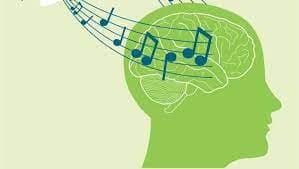
Multi-sensory approaches of music in the brain — I
By Aradhana Deogharia - Jul 15, 2021
The future of evidence-based treatment plans for sensorimotor dysfunctions of neurological disorders lies behind the concepts and research of ‘Multi-sensory approaches of music. In the brain’. The therapeutic use of music in the rehabilitation and development of patients with Parkinson’s, Traumatic Brain Injury, Stroke, Multiple Sclerosis and Huntington’s Disease has been well documented since the 1990s. This article provides a glimpse of three standardised rhythmic-musical applications for rehabilitation, development and maintenance of sensorimotor function.

Multi-sensory approaches of music in the brain — II
By Aradhana Deogharia - Jul 15, 2021
The growing number of mental health problems in the older adult population during the pandemic is a global health concern. Difficulties with emotional, psychological and psychosocial needs can lead to anxiety, depression, loneliness, mood and stress disorders. The evidence-based treatment plan of music therapy can be used as an effective tool for mental health professionals. Co-related studies on music and emotions reveal that the therapeutic effects of music on the ageing brain might be due to the various simulations in brain processing. In this paper, the whole explanation is divided into two parts and an attempt is made to find the interconnected explanations of multi-sensory approaches of music in the brain and neuro-chemical responses to induce positive emotions for well-being in older adults. This paper tries to investigate some facts about the holistic approach of music therapy as an effective tool in mental health practices and rehabilitation for older adults with Parkinson’s disease.
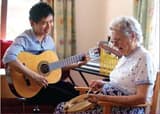
Music Therapy-induced speech and communication in older adults
By Aradhana Deogharia - Jan 15, 2021
This research article investigates the effects of vocal exercises and singing on intelligibility and speech naturalness for subjects with acquired dysarthria due to Parkinson’s, traumatic brain injury, stroke, and neuro-degenerative diseases. A multiple case-study design was used, involving pre, mid, and post-treatment assessments of intelligibility, rate, and naturalness, on four subjects with dysarthria. Each subject participated in 60 weekly group music therapy sessions, involving Rhythmic Speech Cueing, and therapeutic singing techniques of neurological music therapy in combination with the traditional music of India which is based on Indian classical raagas.