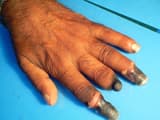
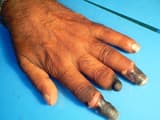
TAO (Buerger’s disease) is an inflammatory condition of the small and medium-sized blood vessels of the arms and legs, leading to an insufficient supply of blood to the tissues, causing pain, discoloration and finally resulting in gangrene. There are a few diseases described in Āyurveda, such as vātarakta, dhaminī praticaya and ghanastravahikajanya śotha, which to some extent have symptoms comparable to TAO.
The multiplicity of classifications and variations in the understanding of this disease in the various systems of medicine makes the issue complex. Ghanastravahikajanya śotha is a coined term equivalent to TAO but dhamanī praticaya, mentioned by Aṣṭañga Saaṅgraha in his sūtrasthāna would be more appropriate and also more reasonable to our knowledge. The following verse substantiates this view:
1. Brimhaniyata: in spite of the intake of nourishing food.

2. Ucita: balanced and wholesome diet.
3. Trrpyate api: leading a normal and pleasant life.
4. Doṣopaliptavadanaha: being narrowly pasted by morbid dossas.

5. Asyarasavaha śirā: the vessels of such a person.
6. Rasaṁ na vahanti: becomes unable to transport plasma or blood.
Even a person with no abnormal mental emotions, who is leading a pleasant life without considerable stress and strain and is nourished by a wholesome and balanced diet, can allow his or her arteries to get pasted by morbid matters. Swelling and thickening of the muscular walls occurs as a result and the walls become rigid and quite incapable of performing their normal function of transporting blood to meet the requirements of the organs. This will cause excessive accumulation of vitiated doṣas, leading to various diseases caused by dhamanī praticaya due to the deposit of morbid doṣas in the blood vessels. Hence, dhamanī praticaya can be considered similar to Thrombo angitis obliterans or Buerger’s disease.

Caraka mentioned the term dhamanī as one of the synonyms of srotas. Channels of circulation or tracts within the body are called srotas because of the trickling or oozing of various secretions through them. They are the pathways for nutrients or waste-products of body metabolism to reach their destination. Caraka saṁhitā points out that these are only the channels of circulation, and as such are different from the substances that are carried through them. They are śirā, dhamanī, rasayana, rasavahinī, nāḍi, pandhaaṅa, mārga, śarīrachidraṇi, saṁvṛtta, asamvuthani, sthāna, asayam and nikathanam. While explaining ssiraa and dhamanīs as synonymous to srotas, their number and functions have been separately mentioned. There are characteristic ways in which normal functions of the channels are disturbed and the specific treatments prescribed to correct such disorders. Channels carrying blood are disturbed by over-indulgence, by unctuous and hot food and drinks, and by over-exposure to the sun and fire. Symptoms related to this srotas include pallor, flushing, fever, burning sensations, haemorrhage and others. Treatment options in this regard also mention bloodletting as a final measure. Thinking on these grounds, excessive indulgence in smoking (dhūmrapāna) may vitiate raktavaha srotus resulting in the above symptoms, which are comparable to symptoms of Thrombo angitis obliterans or Buerger’s disease.
Caraka saṁhitā states when the aggravated doṣas, with certain aetiological factors such as smoking, cause it to enter into the āmāṣaya, interacting with the digestive fire, it results in the formation of āma. This āma probably obstructs the srotus of the lower limbs, resulting in doṣaduṣya sammurchanā and finally establishes the disease.
Types of sroto duṣṭi

There are four types:
1. Atipraviti
excessive production of any particular dhātus.
2. Sanga
obstruction of dhātu, causing localisation of the disease process.


