NAMAH
Progressive perfection

Progressive perfection

By Soumitra Basu

Doctor

Volume 21, Issue 2Jul 15, 20133 min

The urge for perfection can become a stressor in life requiring counselling intervention. This article uses a Ramayana narrative to explain the metapsychology of perfection. The resistance of worldly transactions necessitates that perfection has to be progressively worked upon. Besides, Sri Aurobindo’s insight that the human being is transitional and capable of evolving further in consciousness adds a new dimension to the phenomenon of perfection. Spiritual experiences alone cannot usher in perfection unless complemented by psychological perfection. The Mother’s description of psychological virtues needed for perfection can be used in counselling and personality development programmes.

Progressive perfection

Metapsychology of perfection

One of the most desirable objectives in life is to attain perfection. Indeed, Sri Aurobindo describes that along with freedom, purity and beatitude, perfection forms the yogic quartet that constitutes the nature of divine existence (1). However, in the field of psychotherapy, we often find that the urge for perfection can become sufficiently strenuous to produce anxiety and stress. In vulnerable subjects, this urge can become so exaggerated as to precipitate an obsessive compulsive neurosis. Failure to meet high standards of perfection set by oneself can result in chronic guilt feelings that may border on the pathological. The Type-A executive personality who is more prone to ischemic heart disease is marked among other things by an excessive urge for perfection in executing his or her responsibility, leading to ‘workaholism’. Thus the most cherished objective in life can become a troublesome burden.

As a therapist, I have felt that the metapsychology of perfection should be appreciated if we have to deal with perfection as an issue. Can there be anything perfect in the world? Can the Divine itself create forms that represent sustainable perfection? It seems that not only the human being but the lesser gods can too be lured to imperfection. The story of Ahalya in the Ramayana is a case in point. Brahma, the Supreme Creator, produced beauty in its fullest perfection in the creation of Ahalya. The lesser gods, especially Indra, were tempted. This is significant as Indra shares the same root in Sanskrit as ‘Indriyas’—the senses. It is the function of Indra to see that knowledge is not distorted by the senses. Yet he is a secondary and not a primary power, hence falls short of the perfect perfection.

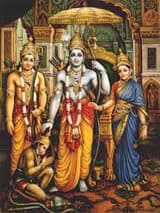
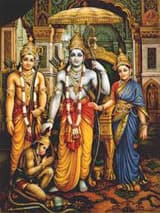
Ahalya was put in the custody of a virtuous and puritan sage, Gautama. Pleased by Gautama’s chastity, Brahma allowed him to marry Ahalya. One day, in the absence of Gautama, Ahalya was sensually lured by Indra. When he came to know of it, Gautama cursed Ahalya in rage, turning her to a stone. Ahalya was never given a chance to defend herself. It is not known whether she was a willing participant or an innocent victim of circumstances. The spell was broken only when the sage Viswamitra requested Lord Rama to free Ahalya by His Divine Grace. However, even before the divine intervention, Satananda born of the wedlock of Gautama and Ahalya had expressed his anguish to Rama about the cruel fate of his mother due to Indra’s imperfection. Incidentally, Satananda was the priest at the ceremony when Rama had arrived to marry King Janaka’s daughter.

This narration gives several interesting insights:

References

1. The Supreme Creator Himself fashioned a perfect form in the being of Ahalya but that neither ensured the sustainability of perfection nor could it save her from being cursed.

2. Gautama’s virtuosity was endorsed by God Himself but that could neither protect his wife nor control his egoistic rage. It is thus not enough to have spiritual experiences, it is also necessary to have a psychological perfection.

3. The lesser gods could not maintain their perfection in the face of temptation. It is surprising why Indra, who is supposed to inhibit distortion of knowledge through the senses, got himself entangled in the lure of the senses. This needs to be understood from two perspectives. Firstly, sensory perception is not the only and perfect gateway to knowledge. There are supra-sensorial pathways like reason and supra-rational pathways like intuition and revelation. Secondly, Sri Aurobindo has revealed what was not known earlier: the senses can themselves be transformed so that a fourth-dimensional perspective becomes available that can directly ‘perceive’ the unitary nature of Reality even while processing diversity in the material world (2).

4. The Divine Grace alone could break the curse as human beings are too imperfect to undo their karma with their own strength and without the Divine afflatus. One could argue that when Brahma representing the Impersonal Creative Divine Force could not safeguard the perfectibility of forms, how could Rama transmit the Divine Grace. Rama is the Avatar, the embodied Divinity, the Personal form of the Divine whose action can be more effectual within the limits of space and time. The Divine is represented both in personal and impersonal dimensions. In the ascetic’s world, removed from the battle of life and secured in the peace and sanctity of the hermitage, the Impersonal Divine is eulogised. In the midst of human transactions loaded with ignorance, falsehood and hedonism, the invocation of the Personal Divine ushers the Saviour Grace.

5. While Gautama, the virtuous and puritan sage, cursed Ahalya, it was another sage, Viswamitra, who advised, albeit instructed Rama, to break the curse. On one hand, it was Viswamitra’s role to reveal the embodied divinity in Rama’s manifestation. On the other hand, Viswamitra, in his endeavour to be perfect, suffered unparalleled ups and downs in life and sādhanā. Besides, he combined spirituality and the science of polity with a vision whose reverberations ran through ages. A seer-wisdom of such a magnitude can demonstrate pragmatism in fields where even the gods dare not to act.

This whole narrative brings the realisation that perfection per se is not a static entity but a relative term. Even God doesn’t fashion a sustainable perfectly finished entity in the world though there may be perfect archetypes in heaven! This is logical as the world represents diversity, multiplicity, divisibility, a veiling of the unitary nature of Reality and hence a matrix where perfection has t