Volume 26, Issue 1
NAMAH Journal Volume 26, Issue 1
Published 15th January 2024
Articles in this Issue
Working through the vital
By Pulkit Sharma - Jan 15, 2024
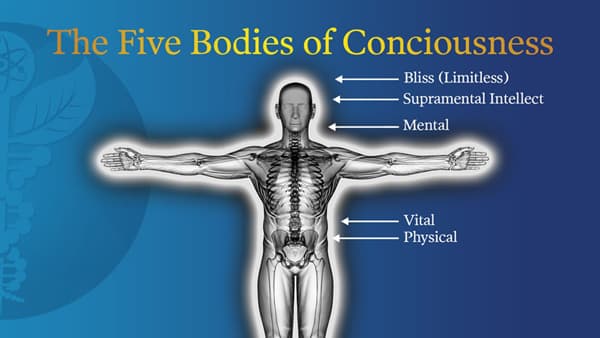
A majority of people believe that by following a particular system of self-improvement or yoga, they will be able to overcome the vital and baser parts of their being. However, despite various psychological and spiritual practices, these parts throw up a robust resistance. In such a scenario, there often comes a split wherein the person experiences spiritual insights in the meditative state but his waking consciousness remains stagnant. If unresolved, this split leads to a relapse and sabotages the evolution of consciousness. Sri Aurobindo and The Mother emphasised that the vital must not be suppressed or ignored and that there is a need to work through it systematically. This paper is based upon the author’s psychotherapeutic experience of helping people work through their vital part by following the principles of Integral Yoga.

Moving Forward
By Unknown Author - Jan 15, 2024
We live in interesting times. On the one hand man is trying to colonise Mars while on the other hand he is trying to save his parent planet Earth from extinction threatened by his own misdeeds. Perhaps these two movements, — a desperate bid to survive another holocaust and some alternate ground of his being, are two sides of the one truth that he is constantly experiencing. It translates into a growing evolutionary tension within him that is taking the form of various maladies and challenges.
American psychology’s psychobiological perspective in the light of Sri Aurobindo’s theory of social development
By Christian A. Latino - Jan 15, 2024
American psychology currently employs a psychobiological perspective in its study of the human psyche and tends to conduct its research using objective empirical methods based on the natural world. This article situates the American psychobiological perspective in Sri Aurobindo’s theory of social development, which posits that societal growth is evolutionary. American psychology’s beginnings in Europe occurred in an era where the ecclesiastical hierarchy ruled through dogma, which may have contributed to the field’s modern-day dependence on objective empiricism as a means to challenge abuses of authority. According to Sri Aurobindo’s theory, a dependence on objective empirical methods is typical prior to the utilisation of more advanced subjective empirical methods. The increasing interest in subjective empirical methods (e.g. mindfulness) in American psychology may indicate the coming of a subjective age in the science. This age may allow for new discoveries in psychology that may provide resolutions for modern-day ills.

Fear and illness
By The Mother - Jan 15, 2024
You must not fear. Most of your troubles come from fear. In fact, ninety per cent of illnesses are the result of the subconscient fear of the body. In the ordinary consciousness of the body there is a more or less hidden anxiety about the consequences of the slightest physical disturbance. It can be translated by these words of doubt about the future: “And what will happen?” It is this anxiety that must be checked. Indeed this anxiety is a lack of confidence in the Divine’s Grace, the unmistakable sign that the consecration is not complete and perfect.

To live without dying
By Soumitra Basu - Jan 15, 2024
While sceptics and rationalists would vouchsafe for a doomsday to be the penultimate destiny of the earth and therefore of humanity (unless it emigrates somewhere else in space), the classical Indian view is that creation has been manifesting and dissolving in a scheme of eternal recurrence. A particular creation can dissolve when it has exhausted all its potentialities of development and would need to start anew with a fresh denouement to explore newer vistas. A creation can also dissolve if it embarks on a course of self-destruction ticking the doomsday clock.