Background and uses
Belonging to the genus Ocimum, basil is from the mint family, Lamiacea. Over 150 different types of basil are grown for their aromatic leaves and volatile oils. Native to south Asia, an important cultivar of this family is the holy basil (Ocimum Sanctum Linn./Ocimum Tenuiflorum/Ocimum gratissimum). Tulsi has been used in AAAyurvedic therapy for numerous health conditions as a medicinal tea or extract. Scientific findings have been widely reported on its salutatory benefits as an adaptogen (stress mediator) that is immunomodulatory, anti-inflammatory, anti-carcinogenic, hepato-protective, cardio-protective, neuro-protective, anti-microbial, and anti-diabetic (1).
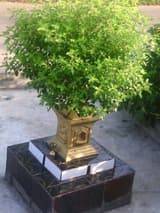
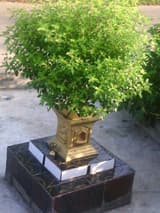
Tulsi is a perennial plant. It is an erect, and many branched sub-shrub, 30-60 cm (12-24 in) tall with hairy stems and leaves that are green or purple. The types of tulsi with medicinal benefits are Rama or Sri tulsi (green leaves), Krishna or Shyama tulsi (purplish leaves) Ocimum tenuiflorum/Ocimum sanctum L., and Vana or wild/forest tulsi (dark green leaves) Ocimum gratissimum (2). These contain high levels of eugenol (3). Tulsi leaves can be taken fresh or can be dried and made into a powder, that can be used in herbal formulas.
Active constituents
The primary phytochemical constituents of tulsi are oleanolic acid, ursolic acid, rosmarinic acid, eugenol, carvacrol, linalool, β-caryophyllene (about 8%) (4). The tulsi leaf’s active essential oils consist of eugenol (~70%), β-elemene (~11.0%), β-caryophyllene (~8%) and germacrene (~2%), with the balance being made up of various trace compounds, mostly terpenes (5).
Uses in traditional medicine

In Āyurveda, tulsi is referred to as ‘The Incomparable One’, ‘The Queen of Herbs’ and revered as ’The Elixir of Life’. Daily consumption of tulsi is renowned to be health-enhancing and disease-preventive. In traditional natural medicine, it is recommended in the management of bronchitis, bronchial asthma, chronic fever, malaria, dysentery, arthritis, skin diseases and painful eye diseases. Eugenol, the active constituent present in tulsi is largely responsible for its therapeutic effects.
Uses in Western medicine
The medicinal properties of tulsi are being studied in hundreds of scientific studies. In vitro and animal experiments and human trials have documented its value as being anti-diabetic, anti-arthritic, hepato-protective (protects against liver damage), anti-cancer, chemo preventive, radio-protective, cardio-protective, anti-hypertensive (lowering high blood pressure), anti-coagulant activities (blood thinner), anti-hypercholesterolemia (preventing excess cholesterol in the blood), anti-depressant, anti-stress, anti-thyroid, supporting fertility, anti-diarrheal, anti-ulcer, anti-asthmatic, anti-pyretic (fever reducing), anti-spasmodic (reducing muscle spasms), anti-emetic (reducing vomiting and nausea), anthelmintic (expelling worms and parasites), anti-bacterial, anti-viral, anti-tussive (cough suppressant), anti-malarial, anti-oxidant, anti-cataract, anti-allergic and memory-enhancing (6).
• Tulsi promotes well-being and improves resilience, by modulating the body’s response to stress.
• Tulsi has shown the ability to decrease glucose levels, improve blood pressure and lipid profiles and reduce many symptoms experienced by patients with type II diabetes (7).
• Tulsi has been reported to prevent cancers caused by inducing apoptosis in pre-cancerous and cancerous cells, thereby reducing the growth of tumours and enhancing survival (8). It has also shown ability to stabilise gene expression altered both by cancer and radiation therapy (9,10).

• Tulsi has demonstrated anti-bacterial, anti-viral and anti-fungal activity, including activity against many pathogens responsible for infections (11).
Clinical trial data
Cancer clinical trial data
Summary of clinical findings
Numerous clinical trials indicate the stress lowering property of tulsi, and its value in managing anxiety disorder and depression. Tulsi has been safely and reliably used to lower serum glucose levels, serum triglycerides, and be cardioprotective. It also balances the immune system and healsgastric ulcers.
In select cell studies of prostate, breast, pancreatic, oral, and lung cancers, tulsi has demonstrated apoptosis, and slowing the proliferation of cancer cells and showing potential for use as an anti-cancer agent. Clearly, more human trials are required to explore the optimal dose, duration and synergistic use of tulsi with other plants such as turmeric and ashwagandha.

Doses of 300-1,200 mg of tulsi (Ocimum sanctum L.) per day have been used in human studies showed above in the trials above.
Contra-indications
Having been granted a ‘Generally Recognized as Safe’, (GRAS) status in the United States of America by the Food and Drug Administration (FDA), tulsi (Ocimum Sanctum L./ Ocimum tenuiflorum/Ocimum gratissimum) is well tolerated by most people. Patients with known allergy/hypersensitivity to tulsi, or to plants of the Lamiaceae family, should avoid using this botanical agent. The plants included in the Lamiaceae are mints and balms. Exercise caution for hypoglycemia, bleeding disorders or those on anti-coagulant or anti-platelet drugs. Avoid if trying to get pregnant or breastfeeding.
No toxicity has been reported following short or long-term administration of tulsi at standard doses.
Modern scientific studies have demonstrated that tulsi is effective in treating eating a range of stressful conditions. Within Āyurveda, it is more commonly recommended as a preventive measure to enhance the ability to adapt to both psychological and physical stress and therefore prevent the development of stress-related diseases. Both of these findings are significant. Clinical trial data are indicative of the broad power and diverse health benefits of tulsi.
Tulsi is at the top of the green herbal pantheon. It is beautiful, aromatic and divinely refreshing. Modern-day scientific research into tulsi demonstrates many psychological and physiological benefits and provides a testament to the wisdom inherent in Hinduism and Āyurveda, which celebrate tulsi as a plant that can be worshipped, ingested, made into tea and used for medicinal and spiritual purposes. The herb can be used to include in our day-to-day cooking, whether fresh or dried. Tulsi is affordable, accessible and very palatable as a tea or extract. We recommend daily consumption of tulsi or holy basil tea as a foundational diet and lifestyle practice.