Volume 29, Issue 2
NAMAH Journal Volume 29, Issue 2
Articles in this Issue

Reaching one’s psychic being through prayer
By Denis Capdeville - Jul 15, 2021
Prayer can sometimes be a complex exercise, because a lot of external and internal parameters may pollute it during its practice. This article is not aiming to define what a prayer is or not, since prayer is a very intimate experience one has with the Divine. This article aims at bringing useful details to integrate a better practice,which may provide in return evidence that the prayer has been well handled.With a steady practice, one may gain self-confidence and joy, while harvesting concrete outcomes, both with regards to specific requests and to establish a compelling connection with the Divine. “All sincere prayers are granted, every call is answered (1).”
Physical Education
By The Mother - Jul 15, 2021
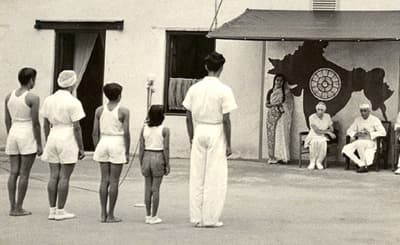
Of all the domains of human consciousness, the physical is the one most completely governed by method, order, discipline, process. The lack of plasticity and receptivity in matter has to be replaced by a detailed organisation that is both precise and comprehensive. In this organisation, one must not forget the interdependence and interpenetration of all the domains of the being. However, even a mental or vital impulse, to express itself physically, must submit to an exact process. That is why all education of the body, if it is to be effective, must be rigorous and detailed, far-sighted and methodical. This will be translated into habits; the body is a being of habits. But these habits should be controlled and disciplined, while remaining flexible enough to adapt themselves to circumstances and to the needs of the growth and development of the being.

Offer and transcend your grief
By James Anderson - Jul 15, 2021
James Anderson is a member of SAIIIHR and coordinating editor of NAMAH.
Multi-sensory approaches of music in the brain — I
By Aradhana Deogharia - Jul 15, 2021
The future of evidence-based treatment plans for sensorimotor dysfunctions of neurological disorders lies behind the concepts and research of ‘Multi-sensory approaches of music. In the brain’. The therapeutic use of music in the rehabilitation and development of patients with Parkinson’s, Traumatic Brain Injury, Stroke, Multiple Sclerosis and Huntington’s Disease has been well documented since the 1990s. This article provides a glimpse of three standardised rhythmic-musical applications for rehabilitation, development and maintenance of sensorimotor function.

Multi-sensory approaches of music in the brain — II
By Aradhana Deogharia - Jul 15, 2021
The growing number of mental health problems in the older adult population during the pandemic is a global health concern. Difficulties with emotional, psychological and psychosocial needs can lead to anxiety, depression, loneliness, mood and stress disorders. The evidence-based treatment plan of music therapy can be used as an effective tool for mental health professionals. Co-related studies on music and emotions reveal that the therapeutic effects of music on the ageing brain might be due to the various simulations in brain processing. In this paper, the whole explanation is divided into two parts and an attempt is made to find the interconnected explanations of multi-sensory approaches of music in the brain and neuro-chemical responses to induce positive emotions for well-being in older adults. This paper tries to investigate some facts about the holistic approach of music therapy as an effective tool in mental health practices and rehabilitation for older adults with Parkinson’s disease.