
A review Of jāṅgama dravyas (animal products) in the commentary of Siddhabheṣajamaṇimālā
By Asit K. Panja, Dr. Ruprekha Dutta, Dr. Mita Kotecha - Jul 15, 2014
Animals and animal products play an important role in our lives. Every day we use various products, such as milk and milk products, meat, eggs, etc. The whole range is documented in a vast and complex way in Āyurvedic science. In various classical texts, clinical applications of animal products are to be found. So it is very important to study those which can be used for a healthy life and to prevent disease. This study deals with the clinical applications of different animal products described in a classical text of the 18th Century.

Immunity in Āyurveda
By Asit Kumar Panja - Jan 15, 2016
Dr. Asit Kumar Panja , M.D., D.Y.N., Ph.D. is Lecturer at the Dept. of Basic Principles, National Institute of Ayurveda, Jaipur.
The prevalence of hepatitis B in India and its prevention with Āyurveda – a revisit
By Martha Bhaskar Rao - Jan 15, 2012
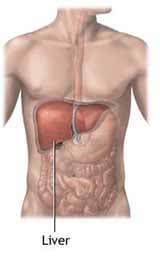
While modern medicine has identified certain causative factors that operate behind an illness or predispose us to it, this knowledge does not always and necessarily translate into finding a cure for it. The reasons for the gap between knowing and controlling are many. Systems of knowledge such as Āyurveda have a slightly different approach to the problem and so are sometimes quite effective against illnesses where modern medical knowledge fails even if it has identified the causative organism. One reason behind this anomaly lies in the fact that Āyurveda has developed through intuition and therefore touches some very fundamental and essential root-causes that bypass the immediate ones. Going beyond material aspects, it identifies subtle states and works through its prescriptions and proscriptions to correct them, to reset the inner balance, so to speak. It is thereby hoped that the body-consciousness will take care of the rest. This article explores the role of Āyurveda in a knotty problem area that is such a drain on the healthcare system.

An evaluation of karañjādi taila and guñjā phala lepa in the management of khalitya
By Dharmpal Bhatt, Dr. S.P.S. Jaijania - Jan 15, 2013
Each age of mankind has its own illuminations and discoveries to make. While the cycles of time may move them out of sight for a while, often we return back to these lost truths that had been hastily discarded or summarily dismissed. Now that we return to a new age of longing and finding, it is natural that man's gaze will turn towards all that has been left behind and rediscover the old in terms of the new. If Āyurveda bears the pride of a unique legacy, it must also bear the burden of re-examining its old truths in the light of modern methods, so as to validate them in the language and through the methods that modern mind understands, since it is conversant with these alone. The article below is a good example how formulas are being examined and validated through modern statistical methods.

Ethical considerations in the Āyurveda classics
By Asit Kumar Panja, Suman Godara - Apr 24, 2016
Each age of mankind has had its own ethical sense. In ancient India, the sense of ethics was born out of Dharma, which is not merely religion, but the recognition of a mighty law of Life or a law of Truth, so to say. While much of the modern sense of ethics is based on a rational view of life, the ethics of developed ancient cultures such as India were primarily rooted in a spiritual and psychic vision and understanding of man and the cosmos. This article explores some of these ethical areas as they would apply in the field of medical practice through the eye of Āyurveda.