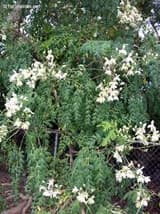
Śigru or drumstick (Moringa pterygosperma, Gaertn., M. oleifera, Lam.)
By K.H. Krishnamurthy - Apr 24, 2013
The Śigru or drumstick tree is native to India. It is one of the most common household plants in South India and like many Indian plants is not only used for food but medicine as well. Here we rediscover a plant growing in our backyard!
Diagnosis and management of anuktavyādhi (undescribed diseases) through Āyurveda
By Ritesh Gujarathi, Dr. Jasmine Gujarathi - Oct 15, 2015
The world of diseases is not static. Each generation sees some new diseases added to the old list. The situation poses a new challenge to understanding and treatment. As the morbidity and mortality scales remain high until the new diseases are understood and remedial measures found as happened in the recent instance of swine flu. However, Āyurveda with its farsightedness caters for such unexpected and unexplained diseases. This it can do because it looks at diseases primarily as an inner imbalance. The true remedy therefore is to reset the inner imbalance by strengthening our inner resources and correcting the internal disequilibrium. There is something we can do until we discover the real nature of a new disease and that something may be more than what is needed. It may correct the unexpected breach of equilibrium resulting in a cure. The following article deals with this strategy of Āyurveda in dealing with diseases of an unexplained origin.

Prevention and management of cardiovascular disease in post-menopausal women through Āyurveda
By Jasmine Gujarathi, Dr. Ritesh Gujarathi - Jan 15, 2015
The post-menopausal period of a woman’s life is more vulnerable due to aging as well as the inevitable scars of menopause. This period is associated with a significant increase in the incidence of age-related medical conditions like cardiovascular diseases and osteoporosis. Cardiovascular disease (CVD) in post-menopausal women is under-diagnosed and under-treated as the clinical features differ in men and women. Diagnosis at a later stage makes the condition difficult to manage and, as a result, there is an increase in the number of deaths in post-menopausal women due to heart-related conditions. Reviewing Āyurvedic literature to understand the disease reveals andvaata as conditions near to post-menopausal cardiac disorders. Use of phytoestrogens in managing various post-menopausal complications encourages extensive use of herbs like Śatāvari in preventing and managing life-threatening diseases like cardiovascular disease and osteoporosis.
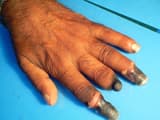
An overview of Buerger’s disease (Thrombo angitis obliterans) in Āyurveda
By Martha Bhaskar Rao, Dr. Hemanth Kumar Kushwaha - Jul 15, 2012
Each age of mankind has its own unique way of understanding and relating with the world around it. Āyurveda belongs to an intuitive age of mankind that precedes the age of rational enlightenment as it also precedes the age of darkness and superstition. However, the two ages that followed it, like night and dawn, disintegrated much of this knowledge and whatever remained was further lost in semantics. It is now difficult to know exactly what each word used in that age stood for unless we enter into an inner sympathy with it. The article is an interesting attempt to bridge the gap between the two ages, the ancient wisdom and modern knowledge using a rare disease as its model.

An overview of certain Āyurvedic herbs in the management of viral hepatitis
By Martha Bhaskar Rao - Oct 15, 2011
Long before modern medicine came into existence, there existed in all countries a knowledge of herbs that helped in various ways. The very fact that humanity has survived critical transitions, wars and famines is itself empirical proof of the value of these herbs. Now that we are realising that modern medicine pays a heavy price, there is an attempt the world over to dig into the lost secrets. This search is not without difficulty. It is like learning an entirely new language. Our present knowledge sometimes becomes a bar. The ancients saw the world differently: they felt and experienced it in another way, a way we have lost but whose trail still lingers in our memory, energising us to undertake the same journey from our present point. This article tries to bridge a gap that is the need of the hour.